
FCBA Honeybee Removal & Relocation Services
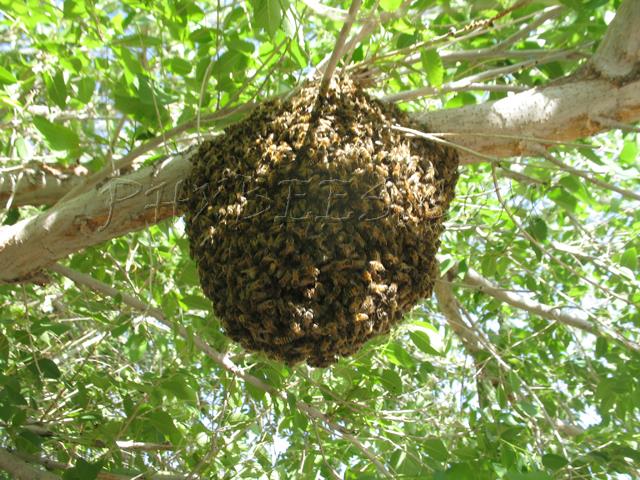
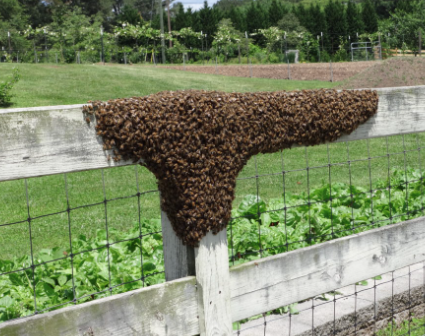
Bees most often swarm in the spring. But before setting up a new home in a cavity, such as a bee tree, chimney, or inside the wall of a house, bees will “bivouac” in a cluster out in the open for a short period to decide where they will go to establish their new home. The cluster might hang from a tree branch, or gather inside a bush, or cling to a fencepost or truck fender! We refer to this as a “swarm.” Our members will gladly remove and rehouse these homeless swarms for free to help ensure that they survive the upcoming winter.
The bees will leave their “bivouac” once they decide in which neighborhood cavity they will start building their new home. Removing established colonies from inside a wall, chimney or outbuilding is challenging and requires great skill and competence. These removals of established bee colonies are called “cut-outs.” Some of our members offer cut-out services on a fee basis.
If you notice a swarm of honeybees that needs to be relocated, or if you happen to find that honeybees have already established a colony within the wall of your home or an outbuilding, please contact the FCBA to have them removed and relocated
Click on this link to request either swarm removal or cut-out services:
 Once you submit your form, a member of the FCBA will respond to your request with a phone call to the number you provide.
How it Works
You will receive an SMS text acknowledging your request. Your request will immediately be sent to club members via SMS text message. A beekeeper will quickly call you to review the particulars of your request. For swarms, the beekeeper will rush right over to capture the bees before they leave their “bivouac” and fly away!
Honeybee swarms are remarkably docile and will not attack you. Please do not spray them or throw objects at them to make them leave. Doing so will only disrupt their cluster momentarily, and they will simply return to form the cluster again. If you do nothing at all, the swarm will move on to more permanent housing of their choice within a few hours.
The form you will complete gathers some important information regarding the bee swarm that the beekeeper will be asking about when he calls. Here are the kinds of swarm-related details that will be helpful for the beekeeper to know:
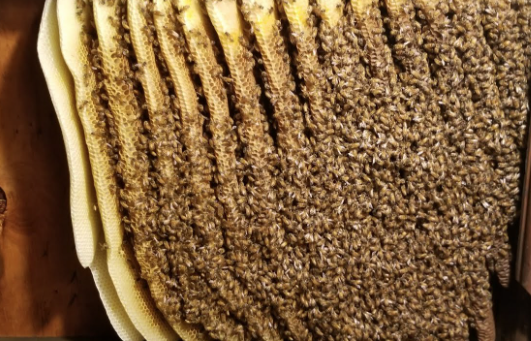
- Are these really honeybees? What does the cluster look like? Beekeepers are not interested in yellow jackets, wasps, or hornet nests. Above are some examples of what honeybee swarms look like.
- Include photos of the swarm (up close as well as from a distance) in your request.
- What is the swarm clustered on (hanging from a branch? clinging to a fence post, tree trunk or telephone pole?)
- How high is it from the ground? The beekeeper might need to bring a ladder.
- How large is the swarm (watermelon? basketball?)
- How long has the swarm been at this location?
- What is your address, phone number, and email address?
- Will you be present to point out where the swarm is when the beekeeper arrives? If not, please provide exact directions so the beekeeper can locate it on your property.
- Can the beekeeper drive up to the swarm, or is it a long walk to get to it?
- Do gates or fences interfere with access?
- Is it on your property or someone else’s?
- Have you sprayed it with any insecticide?
- Do you have any pets or farm animals that might be troublesome to the beekeeper?